Enterprise knowledge bases & search
- Document ingestion & chunking pipelines
- Vector stores with citation-aware retrieval
- Permission-aware access to source content
We ship RAG pipelines, agents, and fine-tuned models into production — not slide decks. Senior ML engineers integrate AI into your existing stack with evals, guardrails, and cost controls from day one. You get measurable outcomes, honest feasibility assessments, and systems your team can operate after handoff.
87% of AI projects never make it to production when teams treat LLMs like magic — skipping evals, ignoring data quality, and bolting chat interfaces onto problems that need structured automation.
We've seen the pattern: impressive POCs that hallucinate in front of customers, runaway API costs with no monitoring, prompt libraries in Google Docs, and compliance teams blocking launch because PII handling was an afterthought. The cost isn't just the GPU bill — it's lost trust, stalled product roadmaps, and engineering teams sceptical of AI ever working in production.
Eight practice areas — each with defined deliverables, technology tags, and deep links where a dedicated spoke exists.
Tabbed by category — not a hype list. We pick models and tools based on latency, cost, data residency, and your compliance footprint.
Each principle addresses a known AI project failure mode — the difference between a serious ML partner and a chatbot agency.
Failure mode: shipping because the demo "felt good." We define benchmark suites — accuracy, hallucination rate, latency, cost per query — before a single user sees output.
Failure mode: vendor lock-in and data leaving your boundary. Pipelines, prompts, and model configs live in your repos and cloud accounts — with VPC-isolated inference when compliance requires it.
Failure mode: prompt injection and PII leaks discovered by customers. Safety rules, input validation, output filtering, and audit trails are parallel workstreams — not a post-launch patch.
Failure mode: runaway API bills with no visibility. Token budgets, caching strategies, model routing, and per-feature cost dashboards are designed in — not discovered on the invoice.
A senior ML engineer — not a salesperson — reviews your data and returns an honest feasibility assessment within one business day.
Sector-specific data patterns and compliance contexts — not generic chatbot wrappers. See all industries →
Same senior ML bar across every model — pick the shape that matches your certainty and data readiness.
Ideal when you have a validated use case — RAG knowledge base, document automation, or a single AI feature — with fixed pricing per phase and eval-based acceptance criteria.
Scope a fixed build →A cross-functional ML team embedded in your product — for platforms adding AI features continuously. Monthly retainer with sprint-level scope reviews and ongoing model monitoring.
Explore dedicated pods →Pre-vetted senior ML engineers who join your team, data pipelines, and rituals — when you need specific AI skills fast without a full pod. Scale up or down monthly.
Augment your team →Industry · Challenge · Solution · Outcome. See all work →
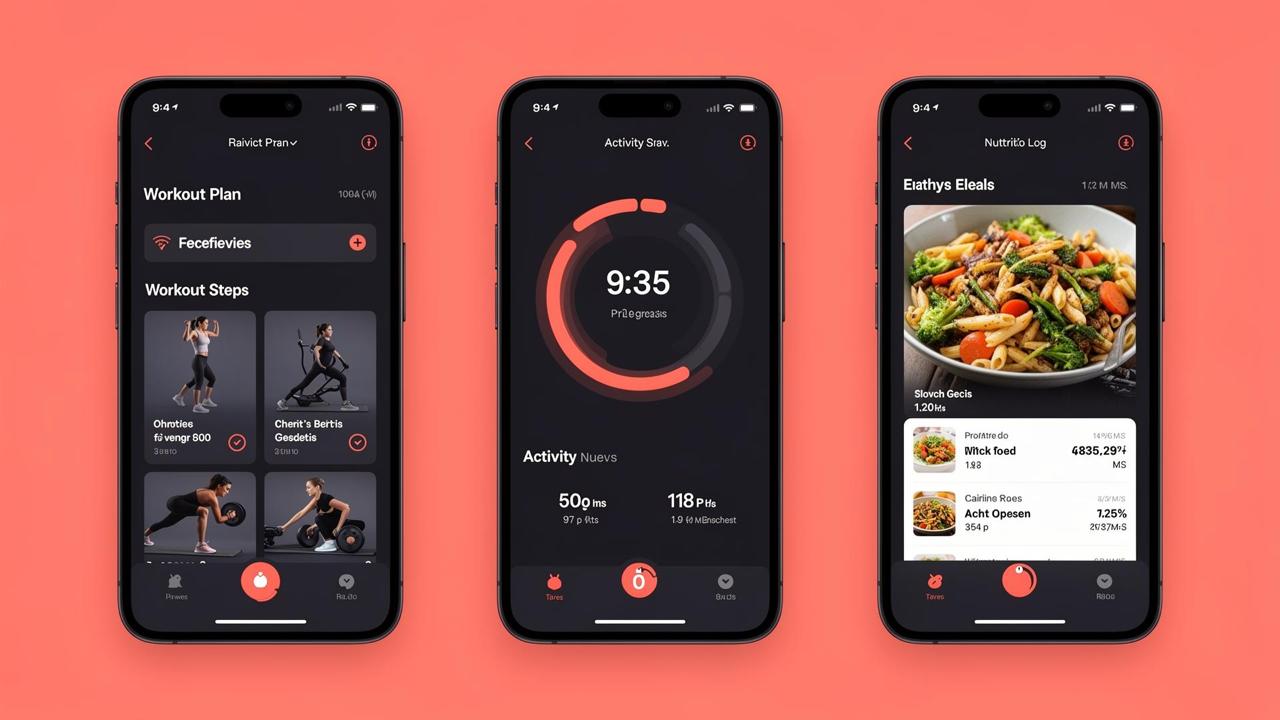
Challenge: Build personalised workout and nutrition recommendations from wearable data with HIPAA-aware handling.
Outcome: v1 launched in 10 weeks; 4.8★ App Store rating; 65% 30-day retention.
Read case study →Challenge: Embed smart dashboards and natural-language query into a multi-tenant SaaS for GTM teams.
Outcome: P95 load under 2 seconds; enterprise rollout in 6 months; SOC 2 ready.
Read case study →Challenge: Personalise learning paths and automate assessment grading for 50k+ concurrent learners.
Outcome: 3× course completion rate; 14 regional languages; 50k+ concurrent users.
Read case study →Not generic AI agency claims. Differentiators that matter when you're evaluating an ML delivery partner.
Every AI feature ships with an eval harness — accuracy, hallucination rate, latency, and cost per query measured before users see it. Subjective "it feels good" isn't a release criterion.
We don't hand you a model and walk away. The same pod builds the inference pipeline, product integration, monitoring, and the UI your users interact with.
We'll tell you when AI isn't the right answer — and when a simpler rules engine or structured automation solves the problem at a fraction of the cost.
PII redaction, VPC-isolated inference, audit trails, and HIPAA/GDPR patterns built into AI pipelines — not bolted on when compliance asks questions.
A cadence built for ML work — measurable progress every week, no demo-only deliverables.
Map use cases, data sources, quality gaps, and risks. Define success metrics and eval criteria. Exit with an honest go/no-go recommendation and scoped roadmap.
Choose models, retrieval strategy, and guardrail design based on latency, cost, and compliance. ADRs document every decision — including fallback behaviour.
Ingestion, chunking, embedding, and vector store setup tuned to your content. Permission-aware retrieval so users only see what they're authorised to access.
Working POC with eval results, cost estimates, and integration plan — demoed every week. Quality measured against benchmarks, not gut feel.
Prompt injection tests, PII handling review, load tests, and guardrail validation. Production readiness is a parallel track — not a surprise at launch.
Embed AI into your product with feature flags, staged rollouts, and monitoring from minute one. Runbooks and team training for ongoing operation.
Track quality drift, tune costs, refine prompts and models on real usage data. Optional retainer for ongoing feature work and model updates.
AI buyers evaluate data handling and model ownership before they evaluate model accuracy. We address both upfront — not when legal reviews the contract.
Model & data ownership: All pipelines, prompts, fine-tuned weights, and eval harnesses live in your repositories and cloud accounts. We never train on your data for other clients. Standard mutual NDA before any data access.
Models, data privacy, evals, pricing, and timelines — the decision-stage questions your buying committee will ask.
AI and machine learning services cover the design, development, and operation of intelligent systems that automate decisions, extract insights from data, and enhance product experiences — from RAG-powered knowledge bases and document automation to recommendation engines and AI agents.
Unlike generic "AI consulting" that ends in strategy decks, production ML services deliver working systems integrated into your product with eval harnesses, guardrails, and monitoring. The scope spans data pipeline engineering, model selection and fine-tuning, inference infrastructure, product integration, and ongoing MLOps.
Modern AI delivery typically leverages large language models (LLMs) for language understanding and generation, combined with retrieval systems, structured data pipelines, and traditional ML models where appropriate. The key distinction is production readiness — systems that work reliably at scale, not demos that impress in a meeting.
Invest when AI solves a specific, measurable business problem — not because it's trending. The clearest signals:
Don't invest in AI when a simpler solution works — rules engines, structured automation, or better UX often solve the problem at a fraction of the cost and complexity.
Technical evaluators (CTOs, ML leads) and commercial evaluators (CFOs, product leaders) look for different signals. A strong provider addresses both.
AI project costs depend on use case complexity, data readiness, model choice, and compliance requirements — not just development hours.
After shipping AI features across HealthTech, SaaS, FinTech, and EdTech, these are the failure patterns we see most often.
Share your use case and data context — a senior ML engineer replies within one business day. No sales handoff, no pitch deck.